
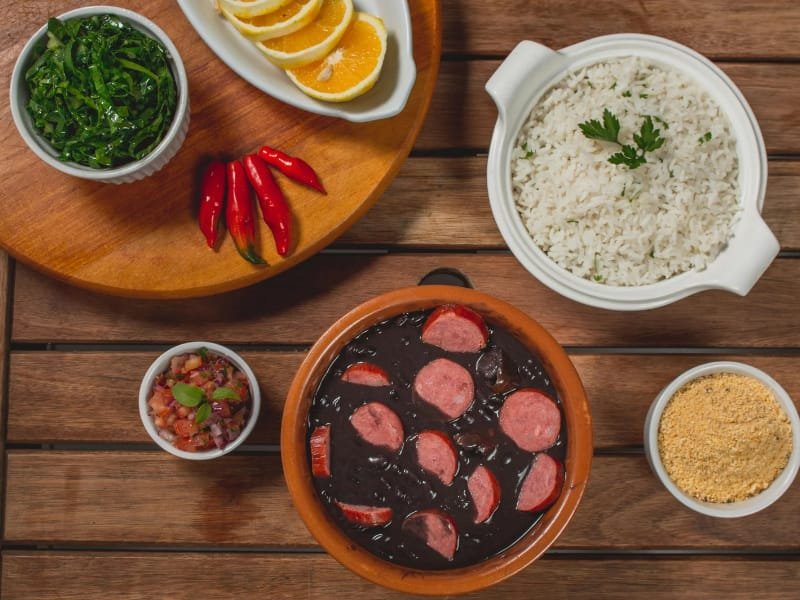
When Brazilian cuisine is mentioned abroad, feijoada is often one of the first dishes that comes to mind. Although it is a beloved classic with a special place in Brazilian culture, it represents only a small part of the country’s extraordinary culinary diversity.
Brazil is home to different biomes, cultures and traditions that directly influence what ends up on the plate. In Bahia, palm oil and coconut milk help shape a cuisine known for its intense flavors, while the Amazon offers ingredients that remain relatively unfamiliar internationally, such as tucupi, jambu, pirarucu and cupuaçu.
In Minas Gerais, comfort food takes center stage in dishes such as pão de queijo, tutu, chicken with okra and traditional sweets. In the South, meats, pasta, cured meats and recipes brought by European communities coexist with local ingredients and customs. In states such as Goiás and Mato Grosso, ingredients like pequi, corn and cassava, along with different types of meat, help define distinctive regional culinary identities.
Even seemingly simple ingredients, such as cassava, corn, beans and bananas, can take on countless forms depending on the region.
This multiplicity is one of the great strengths of Brazilian cuisine. There is no single “Brazilian cuisine,” but rather a collection of regional cuisines that share ingredients, influences and stories.
For visitors, this means that the gastronomic experience can become part of the journey itself. Exploring different dishes is also a way of crossing different cultural landscapes.
Getting to know Brazil through its food, therefore, means discovering a country far greater than the stereotypes often associated with it. In every region, new flavors help tell a different story — and invite travelers to keep exploring.